
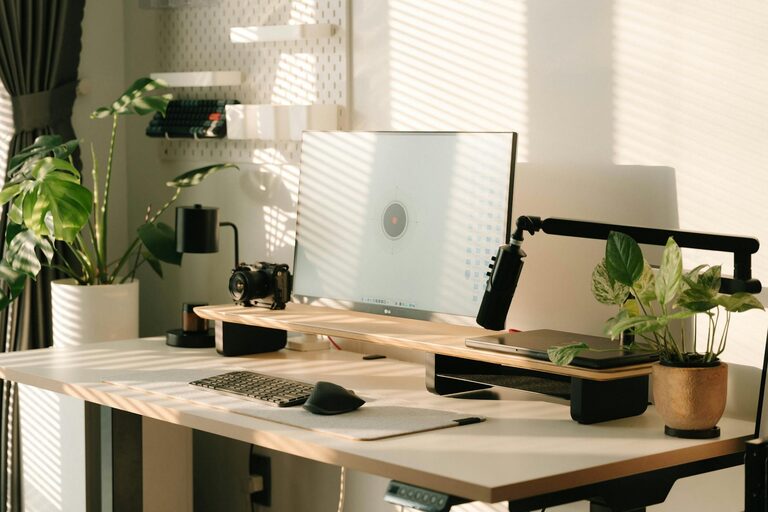
Creating a productive home workspace is essential for anyone working remotely, studying, or managing projects from home. A well-designed setup can improve focus, efficiency, and overall well-being. In this post, we’ll explore practical tips to help you create a home workspace that supports productivity while maintaining comfort.
1. Choose the Right Location
Selecting the ideal spot for your workspace is the first step. Consider these factors:
– Quiet and low traffic: Pick a space away from distractions such as frequent noise or foot traffic.
– Natural light: Position your desk near a window if possible to take advantage of daylight, which helps reduce eye strain and boosts mood.
– Privacy: Ensure the area can be closed off or separated from other household activities to minimise interruptions.
If space is limited, even a small corner with a desk can work well, provided it’s dedicated solely to work.
2. Invest in a Comfortable Chair and Desk
The furniture you choose directly impacts your posture and comfort during long work sessions.
– Ergonomic chair: Look for chairs that support your lower back, encourage good posture, and have adjustable height and armrests.
– Desk height: Your desk should allow your arms to rest comfortably at 90 degrees when typing or writing.
– Adequate surface area: Make sure your desk is large enough for your computer, notepads, and other frequently used items without feeling cluttered.
Comfort helps prevent fatigue, back pain, and poor concentration.
3. Optimise Lighting
In addition to natural light, your workspace needs good artificial lighting.
– Task lighting: Use a desk lamp with adjustable brightness to reduce eye strain during detailed work.
– Avoid glare: Position screens and lights so there’s no direct glare on your monitor.
– Warm light: Choose bulbs with a natural or warm colour temperature as harsh blue light can be tiring.
Well-thought-out lighting creates an inviting atmosphere conducive to longer work periods.
4. Declutter and Organise
Clutter can quickly distract and overwhelm you. To keep your workspace tidy:
– Use storage solutions: Drawers, shelves, or boxes help keep documents and supplies organised yet accessible.
– Minimalist approach: Only keep essentials on your desk to maintain a clean and focused environment.
– Cable management: Employ clips or ties to keep cords orderly and prevent tangling.
Regularly tidying your space can enhance your sense of control and focus.
5. Personalise Your Environment
Adding personal touches makes your workspace more enjoyable and motivating.
– Plants: Small indoor plants improve air quality and add a natural element that soothes the mind.
– Artwork or photos: Choose uplifting images or inspirational quotes—but keep it subtle to avoid distraction.
– Comfort items: A cushion or wrist rest can provide extra support and make your setup more pleasant.
Personalising your area fosters a positive connection to your work environment.
6. Set Boundaries and Routine
Creating a productive workspace isn’t just about physical setup; habits matter too.
– Define work hours: Stick to consistent start and finish times to maintain balance.
– Dedicated work-only space: Avoid using your workspace for leisure activities to train your brain to focus when you’re there.
– Short breaks: Incorporate regular breaks to stretch, rest your eyes, and recharge energy.
Setting these boundaries helps improve productivity while protecting your well-being.
7. Utilise Technology Wisely
Technology is crucial for home workspaces but can also be a source of distraction if unmanaged.
– Reliable internet: Ensure your connection is stable for video calls and online tasks.
– Essential tools only: Use apps and gadgets that genuinely assist your workflow, avoiding overload.
– Notification management: Silence unnecessary alerts during focused periods to minimise interruptions.
Balancing technology use supports efficient and smooth work sessions.
8. Keep Air Quality Fresh
A well-ventilated workspace supports alertness and comfort.
– Ventilate regularly: Open windows or use air purifiers to improve air flow.
– Avoid cluttered and dusty areas: Clean your workspace frequently to reduce allergens.
– Temperature control: Ensure the room isn’t too hot or cold to maintain concentration.
Fresh air and a comfortable environment contribute significantly to productivity.
—
Designing a productive home workspace involves careful planning of both the physical environment and daily habits. By choosing the right location, investing in comfortable furniture, optimising lighting, and keeping your area organised, you create an inviting space that encourages focus and efficiency. Don’t forget to personalise your workspace and set clear boundaries to maintain balance. With these tips, you can make your home workspace a place where productivity and comfort go hand in hand.